



21.Practical Birth Chart Reading Guide (Chaldean Astrology Approach)

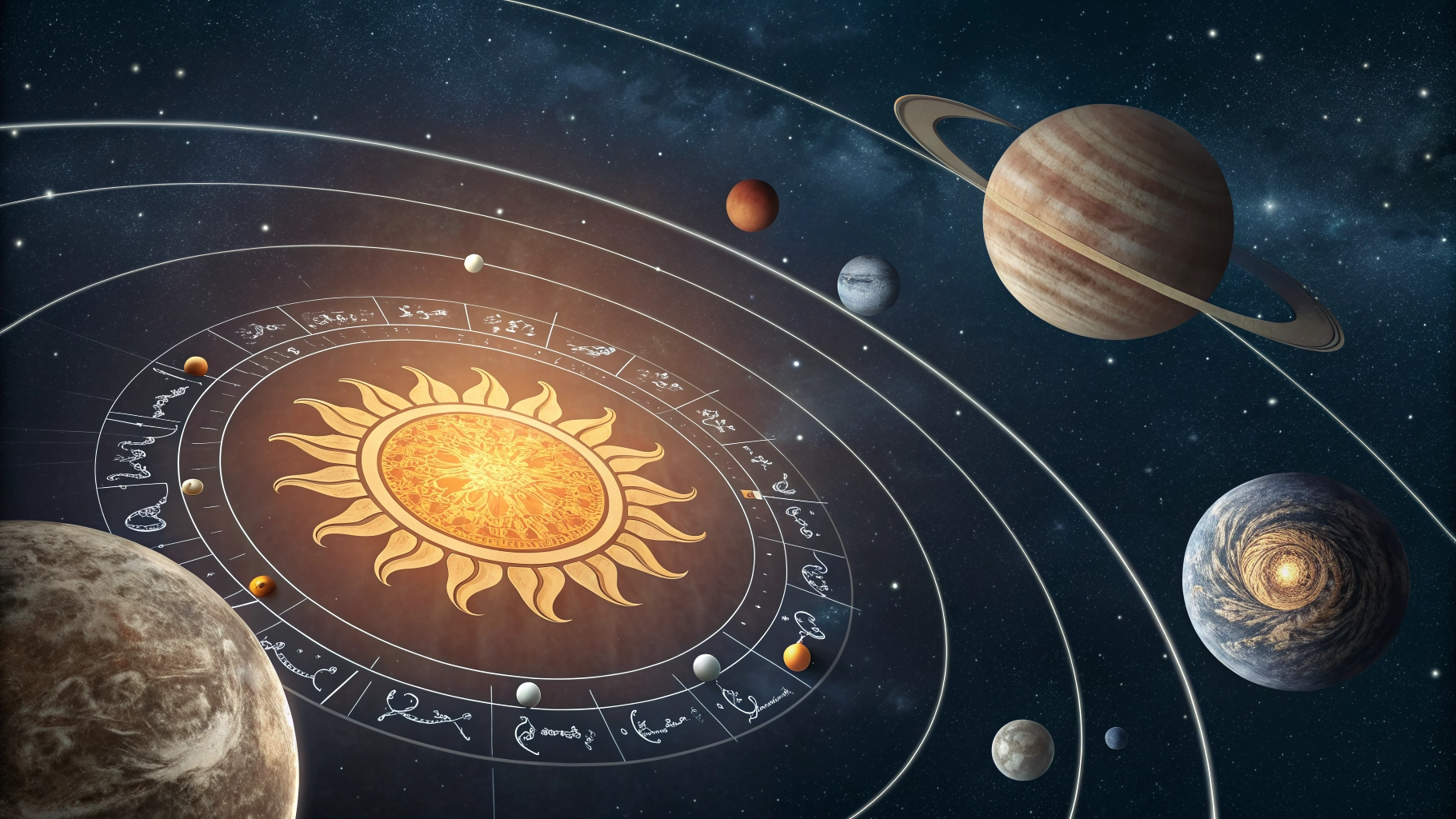
21.Practical Birth Chart Reading Guide (Chaldean Astrology Approach)
Turning a Symbolic System into an Applied Interpretation Method
This guide translates the symbolic structure of Chaldean Astrology into a practical framework for reading natal charts. The goal is not prediction, but understanding the chart as a meaning system.
In this approach, a birth chart is not a list of future events, but a map of relationships and patterns.
1. Core Principle: The Chart Is a System
In the Chaldean approach, a birth chart is read as:
- A system, not a list
- A network of relationships, not isolated symbols
- A dynamic structure, not a static snapshot
Meaning emerges from interaction, not single elements.
2. Step One: Identify the Sun as the Core
The Sun is the center of the chart.
What the Sun represents:
- Core identity
- Life direction
- Conscious self
- Main existential theme
Key question:
“What is the central theme organizing this life?” https://ruhisigi.com/astro-agenda/
The Sun anchors all other planetary interpretations.
3. Step Two: The Moon — Emotional Rhythm
The Moon represents internal flow and instinctive response.
What the Moon represents:
- Emotional habits
- Sense of security
- Automatic reactions
- Inner rhythm
Key question:
“How does this person emotionally respond under pressure?”
The Moon shows the subconscious operating system.
4. Step Three: Personal Planets (Mind and Behavior)
Mercury — Mind
- How does the person think?
- How do they communicate?
- How is information processed?
Venus — Relationships
- How do they form bonds?
- What do they value in connection?
Mars — Action & Response
- How do they act under pressure?
- How is anger expressed?
- What is their drive style?
Key question:
“How does this person interact with the world?”
5. Step Four: Social & Expansive Planets
Jupiter — Expansion
Jupiter \rightarrow Expansion, Growth, Meaning
- Where does life expand?
- How does belief evolve?
- Where do opportunities emerge?
Saturn — Structure & Reality
Saturn \rightarrow Limitation, Structure, Responsibility
- Where are life’s limitations?
- Where is delay or resistance present?
- What long-term lessons repeat?
Key question:
“Where do growth and limitation interact or conflict?”
6. Step Five: Planetary Relationships (The Real Reading Begins Here)
In Chaldean astrology, meaning is primarily relational.
Key dynamics:
- Mars + Venus → attraction vs conflict
- Saturn + Moon → emotional restriction vs security needs
- Jupiter + Mercury → expansion of thought
- Sun + Saturn → identity vs responsibility tension
Key question:
“Which planetary forces support each other, and which create tension?”
7. Step Six: Conflict Zones
Tension points are essential in interpretation.
Common patterns:
- Mars ↔ Saturn → suppressed anger vs discipline
- Venus ↔ Mars → attraction mixed with conflict
- Moon ↔ Saturn → emotional distance or insecurity patterns
Key question:
“Where does internal tension concentrate?”
8. Step Seven: Balancing Forces
Every tension has a compensating structure.
Examples:
- Strong Mars → balanced by Venus (softening)
- Strong Saturn → balanced by Jupiter (expansion)
- Fast Mercury → stabilized by Saturn (structure)
Key question:
“Where does the system self-regulate?”
9. Step Eight: Time Dynamics
In Chaldean astrology, a chart is not static.
Temporal questions:
- When does a theme activate?
- When does it expand?
- When does it contract or stabilize?
Planets behave like life-phase indicators.
10. Final Step: Reduce the Chart to One Sentence
A complete interpretation should be compressible into a core statement.
Example outcomes:
- “A life balancing identity and responsibility”
- “A relational path of transformation and tension”
- “A mind-driven expansion shaped by structural limits”
Final Principle: Chaldean Reading Logic
The essence of this system is:
- Planets are not personalities
- Charts are not destiny lists
- Charts are relational systems of meaning
And meaning emerges from this principle:
The sky does not tell you what will happen.
It shows how patterns of existence are structured.
If you want next steps, we can:
- Apply this method to a real birth chart (case study)
- Or build a “professional chart reading workflow” from scratch